Showing posts with label Pasadena Area. Show all posts

Monday, July 12, 2010

Huntington Museum, Library, and Gardens

In 1919, California railroad magnate Henry Huntington (1850-1927) founded the private non-profit Huntington institution. The Huntington, which is located just east of Pasadena in San Marino, houses an art museum and a rare-books research library that focuses on American and British history and literature. The Huntington is also one of the best botanical gardens in the country and includes Chinese water gardens, Japanese gardens, lily ponds, rose gardens, waterfalls, Australian gardens, jungle gardens, a greenhouse conservatory, and a desert garden.

A view toward the rose garden:

Statues line the grassy promenade leading up to the Huntington mansion:

Here is a traditional pedestrian "moon bridge" or "drum bridge" in the Japanese garden:

My favorite part of the Japanese gardens complex is the wonderful Bonsai Court which houses the collection of the Golden State Bonsai Federation:

California Juniper bonsai trees:

Next to the bonsai court is a beautiful dry garden with raked gravel:

The cacti and succulents in the outstanding desert garden are my favorite part of the Huntington:

Everything in the Chinese water garden has a charming name like "Pavilion for Washing Away Thoughts," "Lake of Reflected Fragrance," or "Isle for Welcoming Cranes." Pictured below are the "Jade Ribbon Bridge" and the "Pavilion of the Three Friends." The three friends represent courage during hard times and include the pine, which stays green all through the winter; bamboo, which is strong and flexible; and the plum tree, which flowers in cool weather.
The arches in the Jade Ribbon Bridge create beautiful full circles with their reflections. If you look closely in the picture, you can see a duck with four fluffy ducklings heading toward the bridge.

Orchids in the conservatory:

One of many fountains on the grounds:

I highly recommend that tourists to LA visit the Huntington. It is preferable to visit on a weekday if possible because the entrance fee is cheaper and the gardens are often very crowded on Saturdays and Sundays.

The Huntington is kid-friendly - children will enjoy the fish ponds, waterfalls, ducks, and little bridges in the Japanese and Chinese gardens; the lizards and hummingbirds in the desert garden; and the interactive activities in the conservatory and children's garden.


Visiting information is available at the Huntington website.


View Huntington Gardens in a larger map

Sunday, April 25, 2010

Bungalow Heaven

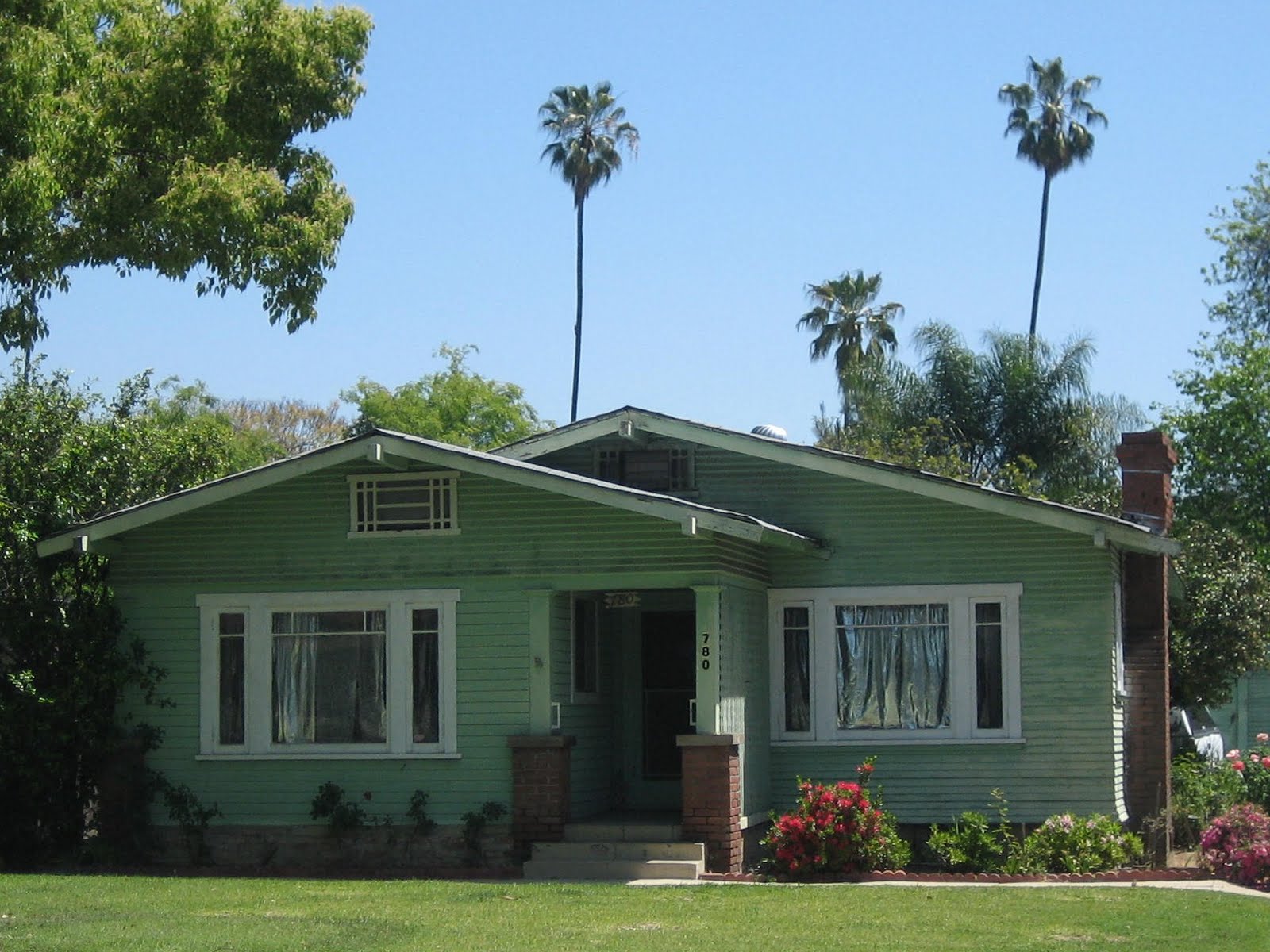
Bungalow Heaven is a lovely neighborhood in Pasadena comprised of almost 1000 one-story Arts and Crafts style bungalows. With its quiet tree-lined streets, pretty gardens, and centrally located park, Bungalow Heaven is one of L.A.'s most charming neighborhoods. Most of the houses in this area were built in the 1910s-1920s and include characteristics typical of the American Craftsman style including low-pitched roofs, overhanging eaves, and beautiful, handcrafted stonework and woodwork.


Bungalow Heaven is bordered by E. Washington Blvd. to the North, E. Orange Grove Blvd. to the South, N. Lake Ave. to the West, and N. Hill Ave. to the East. Every spring, the Bungalow Heaven Neighborhood Association organizes a home tour with 8 different restored bungalows open to the public. For more Pasadena Arts and Crafts pictures, check out my post on the Gamble House.


View Arts and Crafts in a larger map

Sunday, December 13, 2009

L.A. County Arboretum & Botanical Gardens

Los Angeles County operates a large arboretum and botanical garden in Arcadia. The L.A. County Arboretum is less pristine than L.A's privately operated botanical gardens like the nearby Huntington, but admission is cheaper and the grounds are less crowded.


Like many of California's botanical gardens, the L.A. Arboretum's collection focuses on plants from other regions with Mediterranean climates including the Mediterranean basin, Chile, South Africa, western and southern Australia, and northwestern Mexico. The L.A. County Arboretum also includes landscaped ponds, streams, and waterfalls.


There are many birds and animals at the Arboretum including dozens of beautiful Indian Blue Peacocks that walk around very slowly and make loud, horrible noises.

A close-up of a peacock's iridescent tail feathers:
A peacock in front of the women's restroom with its tail fully fanned:
A rear view of the peacock:
An Arboretum staff member taught me that female peacocks are called "peahens" and baby peacocks are "peachicks."

A colorful little Wood Duck:

A Black-Crowned Night-Heron:

A little turtle sunning himself on a log:

The LA County Arboretum is located at 301 North Baldwin Avenue in Arcadia, CA. Visiting information is available on the Arboretum's website.


View L.A. County Arboretum in a larger map

Friday, February 27, 2009

Pasadena: Arts and Crafts

Architect brothers Henry and Charles Greene built this Arts and Crafts style mansion for the Gamble (of Proctor & Gamble) family in 1908. The Gambles had this house built so that they, like many other wealthy Eastern and Mid-Western families of the time, could spend their winters enjoying Pasadena's mild climate. In 1966, the Gamble family placed the house in a trust which is administered by the University of Southern California School of Architecture, the City of Pasadena, and the Gamble family. I highly recommend that anyone visiting L.A. go on a tour of the Gamble House - the house is beautifully restored and the tours are informative and professional.

The Gamble House is built in the Arts and Crafts style which developed as a response to the industrialization and mechanization of production during the Victorian era. Every detail in the Gamble House (furniture, lamps, hardware, air vents, drainspouts, etc...) was designed by the Greenes and hand-made by artists and craftsmen. I was prohibited from taking interior photographs, but excellent interior photos are available on the Gamble House website: http://www.gamblehouse.org/photos/index.html

A front view of the Gamble House:

Arts and Crafts architects were influenced heavily by both Japanese and Swiss aesthetics and sought to create buildings that were harmonious with the landscape. Broad terraces and porches facilitate easy movement between indoor and outdoor space and low-hanging eaves keep interiors cool in the hot California weather.

Blacker House (1177 Hillcrest Avenue, Pasadena) is another Greene and Greene masterpiece built in 1907 that still serves as a private residence:

The Duncan-Irwin House (240 North Grand Avenue, Pasadena) is one of many large Arts and Crafts houses on the blocks surrounding the Gamble House. It was built by Greene and Greene in 1900:

In California and other Western states, small Arts and Crafts style bungalows became extremely popular for lower and middle income families as well. Pasadena's "Bungalow Heaven" district contains hundreds of small Arts and Crafts bungalows built from 1900 to the 1930's for middle-class families.

A classic little bungalow:

A little bungalow that has an addition stuck on top:

Here's one in less than pristine condition:

Brochures for self guided walking tours of Pasadena's Arts and Crafts homes are available at the Gamble House bookstore. Here are the areas that I visited:


View Larger Map